Over-the-counter sprays push them into the walls. Our targeted treatments eliminate entire colonies — not just the ones you see. Get lasting relief from ants and cockroaches in your home or business.
Ants and cockroaches are among the most common pest complaints in Northeast Georgia — and also among the most frustrating to eliminate without professional help. That's because DIY sprays only kill the insects you can see. The queen, the colony, and thousands of workers remain hidden, and killing foragers just causes the colony to branch and spread deeper into your home's walls and structure.
Task Force Pest Control targets ant and cockroach infestations at the source. Using professional-grade baits and non-repellent treatments, foraging workers carry active ingredients back to the nest — eliminating the queen and the colony rather than just suppressing visible activity. Combined with a thorough inspection to identify entry points and harborage areas, our treatments deliver results that last.
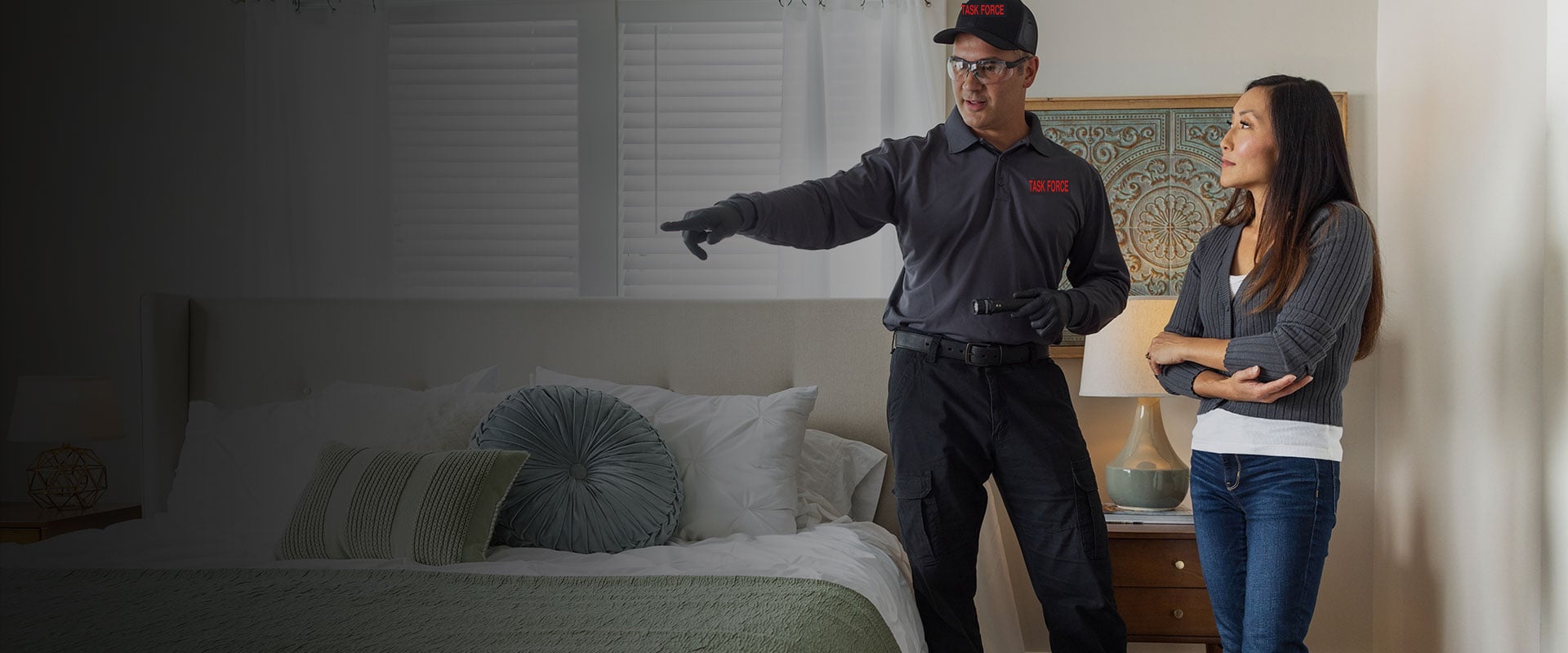
Different ants and roaches require different treatments. We identify the specific species — whether it's fire ants in the yard, carpenter ants in your walls, Argentine ants in the kitchen, or German cockroaches behind your appliances — and tailor our approach accordingly.
We apply colony-killing bait in the foraging paths of workers so it gets transferred back to the queen. For exterior infestations and perimeter protection, we apply non-repellent liquid treatments that workers cross and unwittingly carry inside. The colony doesn't know it's being eliminated until it's gone.
Once the active infestation is eliminated, we establish an exterior perimeter barrier and address the entry points and conditions attracting pests — moisture issues, food sources, cracks in the foundation — to prevent the next colony from moving in.
We don't spray the surface and leave. Our treatments work their way back to the queen so the entire colony is eliminated — not just moved or temporarily suppressed.
We use low-odor, targeted formulations applied precisely to harborage and foraging areas. Bait treatments require no evacuation — families and pets can remain in the home during and after treatment.
Fire ants, German roaches, carpenter ants, and Argentine ants all require different strategies. We identify the species first so we use the most effective treatment — not a generic spray-and-pray approach.
For homes in high-pressure areas, we offer quarterly and bi-monthly maintenance programs that keep ant and roach populations from establishing year-round — prevention is always cheaper than elimination.
If ants or roaches return between your scheduled visits, we come back and re-treat at no extra charge. We don't consider the job done until you're free of pests.
We know which ant and roach species are most common in Madison, Athens, Monroe, and the surrounding communities. Local knowledge makes for faster, more effective treatment decisions.
Stop buying sprays that only make things worse. Get a professional treatment that actually reaches the colony — and keeps them gone for good.
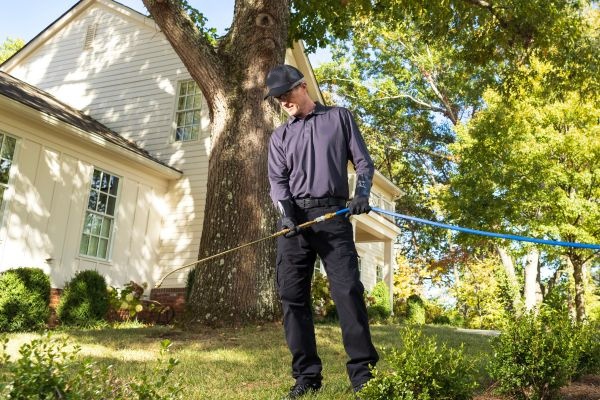
Repellent sprays — including most consumer products — create a chemical barrier that ants detect and avoid. This sends them around the treated area or deeper into your walls, which can scatter the colony and make the problem worse. Professional non-repellent treatments work differently: ants walk through them without detecting anything and carry active ingredients back to the colony, reaching the queen. This is why professional treatment eliminates the colony rather than just redirecting it.
For most bait-based treatments, no evacuation is needed. Gel baits are applied in small, targeted placements inside cabinets, along baseboards, and under appliances — there's no broadcast spraying involved. For perimeter treatments using liquid products, we ask that you keep children and pets off treated surfaces until dry, which is typically 30–60 minutes. We'll give you specific instructions based on the treatment plan we use for your home.
German cockroaches — the most common kitchen species — are fast reproducers, and a small problem can become a large one quickly. Most infestations show a significant reduction within 1–2 weeks of professional treatment, with full elimination typically achieved in 3–6 weeks depending on the severity. We follow up to assess progress and apply additional bait as needed. Keeping food sealed and eliminating moisture issues accelerates results considerably.
Absolutely. Fire ants are a serious hazard — especially for children and pets — and a persistent problem throughout Georgia. We offer both individual mound treatments for targeted relief and broadcast granule applications that protect your entire yard. Broadcast treatments are especially effective because foraging workers carry the bait back to the mound, eliminating the queen and preventing re-establishment. Most customers see significant results within 1–2 weeks.
Carpenter ants don't eat wood — they excavate it to build galleries for their colonies. While they're slower to cause damage than termites, a large, well-established carpenter ant colony can still cause significant structural damage over time, particularly in areas with moisture-damaged wood. If you're seeing large black ants (especially near windows, door frames, or wood trim), it's worth having a professional inspect — catching them early saves money and headaches.